Root Canals in Holladay, UT
Root canals have an awful reputation. In practice this is the treatment that ends the pain, and here is exactly what happens during the appointment.
If you have been told you need a root canal, you may not be sleeping well, and the dread might be worse than the tooth. So here is the honest version: the pain people associate with root canals is nearly always the pain of the infected tooth beforehand. The appointment is how that pain gets to stop.
Dr. David S. Cannon offers root canals in Holladay, Utah, to help save your tooth from infection. This will help clean out the tooth from the roots so that it should not have to be extracted. If you need a root canal from our dentist, call Pinnacle Dental at 801-274-3889 to schedule your appointment today! We can help you keep your natural smile!
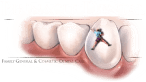
Commonly called a root canal, root canal treatment is a type of endodontic therapy that is often recommended if the tooth pulp and nerves become infected or damaged. This may occur if injury or decay reaches deep into the tooth, past the outer enamel layer. When left untreated, this type of infection and disease may cause the tooth to die and necessitate tooth extraction. To restore the health of the tooth and avoid the need for extraction, our skilled dentist will remove the infected and injured tissues from within the tooth, clean the tooth, and fill it with a medicated material. We will then cap the tooth with a restoration, such as a dental crown, to return the tooth to its original shape and structure. In most cases, a root canal can be completed in only one or two comfortable visits to our office.
Root canal treatment has a reputation for being a painful treatment. In reality, however, root canal treatment can often be completed with minimal discomfort thanks to advanced techniques, tools and anesthesia. Our dentist and entire team work hard to provide you with a pleasant and comfortable experience each time you visit our office. To learn more about root canal treatment, we welcome you to contact us today. We are committed to restoring your smile’s health.
Reasons people come in for this
- A tooth throbs at night, or wakes you up
- Hot coffee sets off a deep ache that keeps going after you swallow
- There is a small pimple-like bump on the gum near one tooth
- A tooth has darkened and looks different from the ones beside it
- A deep cavity or a broken tooth has gone from sensitive to genuinely painful
- You have swelling in your face or jaw near a particular tooth
What it does for you
- The source of the pain is removed, not covered up
- You keep your own tooth and its root
- No gap to fill or replace afterward
- Chewing on that side becomes possible again
- Infection is cleaned out before it spreads into the bone
- You leave with clear aftercare and a number to call
About Root Canals
Dr. Cannon numbs the tooth first and then waits, and he tests it and asks you before anything else happens. A small sheet of rubber called a dam is placed around the tooth to keep it clean and dry, and it also means nothing can drift back toward your throat, which people find reassuring once they know it is there. The rest of the work happens through a small opening in the top of the tooth. Mostly you are lying still with a numb tooth, feeling some pressure and vibration and nothing sharp.
- The treatment that ends the pain
- Fully numb before anything starts
- You can stop and rest anytime
- Keeps your own tooth in place
Benefits of Root Canals
An infected nerve does not recover on its own. It worsens quietly and then, often, quickly, and the pain that arrives when it does is the kind people end up in an emergency room for. The realistic alternative to treating it is losing the tooth, and replacing a missing tooth takes more visits and more money than keeping the one you have. Treating it early also means the appointment is calmer, because a badly infected tooth can be harder to get fully numb.
What to Expect
It helps to know what numb actually feels like, since that is the part people cannot picture. Your lip, your cheek and half of your tongue go heavy and warm, as though they are not quite yours, and that fades over two or three hours afterward. During the appointment you can raise a hand any time you want to pause, swallow or ask a question, and pausing is not a problem for anyone. Tell us when you book that you are nervous, and we will give you a longer slot so nothing feels rushed; you can ask anything in English or Spanish, because every person on our team speaks both.
Common Questions
Will a root canal hurt?
How long does the appointment take?
I am genuinely scared. Can you work with that?
Do I need a crown afterward?
What does a root canal cost?
Terms You May Hear
- Pulp
- The soft tissue in the middle of a tooth, containing the nerve and blood supply. It is what becomes inflamed or infected when decay or a crack reaches deep enough.
- Endodontic treatment
- The formal name for root canal treatment. Endodontic simply means inside the tooth, which is where all of the work takes place.
- Local anesthetic
- The numbing medicine injected near the tooth. It blocks feeling in that area only. You are awake and aware the whole time, and it wears off over a couple of hours.
Ready to Schedule Your Appointment?
If a tooth is keeping you up at night, call 801-274-3889 and we will get you seen.