Dental Crowns in Holladay, UT
A crown covers a tooth that is too broken or decayed to fill, rebuilding its shape so you can bite down on that side without bracing for it.
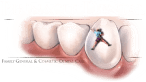
A crown is what we use when a tooth has lost too much of itself to be patched. It is a cap that sits over the whole tooth, so the tooth stops flexing and cracking and starts behaving like a tooth again. It takes two visits, with a temporary crown in between.
At Pinnacle Dental, our dentist and team provide dental crowns in Holladay, Utah, to help protect missing or decayed teeth. Dr. David S. Cannon will place the crown over the affected tooth that will act as a shield against tooth decay. If this is a service you may be interested in, call Pinnacle Dental at 801-274-3889 to schedule a consultation!
A dental crown, or cap, is a restoration that can be used for a number of purposes. One of the most common uses of a dental crown is to restore a tooth that is significantly damaged or decayed. The crown is custom made to fit over the entire tooth, starting at the gumline, in order to restore the tooth to its original shape and size. Dental crowns can be made of gold, porcelain or porcelain fused to metal; porcelain crowns are popular because they match the natural color and appearance of your teeth. Our dentist will help you determine which type of dental crown is right for your smile.
Your smile may benefit from a crown if a tooth is damaged or decayed to the point that a dental filling will not provide a successful restoration. Crowns can also be used for a number of other restorative and aesthetic purposes, including to:
- Protect a tooth following root canal treatment
- Anchor and attach a dental bridge
- Cover and complete a dental implant
- Enhance the beauty of your smile
- Improve a misshapen tooth
- Strengthen a tooth that is fractured or weak
- Support a large filling when little natural tooth structure remains
To find out whether a dental crown is right for you, we welcome you to contact us today!
Reasons people come in for this
- A tooth cracked when you bit down on something hard
- An old, large filling has broken away and there is not much tooth left around it
- You had a root canal a while back and were told to come in for a crown afterward
- A back tooth twinges sharply when you let go of a bite
- A tooth has been repaired two or three times and the fillings keep failing
- A front tooth is worn down or misshapen and you would rather not see it in photos
What it does for you
- You can chew on that side without thinking about it
- A crack is held together instead of spreading
- Cold sensitivity usually settles once the tooth is covered
- Porcelain can be matched to the teeth beside it
- Saving a tooth is simpler than replacing one later
- Your bite is checked and adjusted before you leave
About Dental Crowns
At the first appointment the tooth is numbed and any decay or broken filling is cleared out. The tooth is then shaped down slightly so the crown can fit over it without feeling bulky in your mouth. We take an impression of the tooth and of how your teeth meet, and send it to a dental laboratory that builds the crown to your shape and shade. You go home in a temporary crown, and at the second visit the real one is tried in, adjusted and cemented.
- For teeth too broken to fill
- Holds a cracked tooth together
- Temporary crown while yours is made
- Bite adjusted until it feels right
Benefits of Dental Crowns
A badly broken tooth does not hold still. Every bite flexes it a little, and cracks travel downward over time. Once a crack reaches the root, the tooth usually cannot be saved and the conversation turns to extraction instead. Covering the tooth stops that flexing while there is still a tooth worth covering.
What to Expect
The longest part of a crown appointment is the shaping, and it is quiet, ordinary work. The tooth is numb, and you can raise a hand at any point if you want to rest, swallow or ask something. Dr. Cannon has been doing this in Holladay since 2002 and he does not hurry this step, because a crown that fits well is a crown you forget about. The temporary is not beautiful, but it is comfortable, and if it feels high or comes off, call us and we will get you back in.
Common Questions
Will getting a crown hurt?
Why does it take two visits?
Will it look like a real tooth?
How long will a crown last?
What does a crown cost?
Terms You May Hear
- Crown, or cap
- A custom-made cover that fits over a whole tooth, from the biting surface down to the gumline, replacing the shape the tooth has lost.
- Impression
- A soft putty mold, or a set of them, taken of your tooth and your bite. The laboratory pours a model from it and builds your crown on that model.
- High bite
- When a new crown sits a hair taller than the rest of your teeth, so you hit it first when you close. It is easily adjusted, and it is worth calling about rather than living with.
Ready to Schedule Your Appointment?
Call 801-274-3889 or book online, and we will look at the tooth before deciding anything.