Dental Bridges in Holladay, UT
A bridge closes the space left by a missing tooth, using the teeth on either side to hold it, so you can chew and speak normally again.
Losing a tooth changes small things you never thought about: which side you chew on, whether you cover your mouth when you laugh. A bridge is one straightforward way to get that back, and it works using healthy teeth you already have.
If you have multiple missing teeth, our dentist can offer dental bridges to close the gap and fill out your smile. Dr. David S. Cannon can custom fit the dental prosthetics to your gums and surrounding teeth so that you will not be able to tell where your natural tooth ends and the prosthetic begins. Call Pinnacle Dental at 801-274-3889 to schedule your dental bridge treatment in Holladay, Utah!
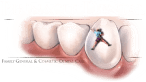
If you are missing a single tooth or multiple teeth in a row, we may recommend a dental bridge to restore your smile. A bridge is a fixed dental restoration, meaning it is nonremovable. The dental bridge is anchored in place through the use of two dental crowns, which are custom made to fit your smile and are placed on the teeth or dental implants next to the space left by the missing tooth. These crowns hold the artificial tooth in place to restore your smile, ensuring that your restoration will not easily shift or come loose. It typically requires only two visits to our practice to complete a dental bridge. Dental bridges are designed to last for many years and to restore the function, beauty and health of your smile.
Our dentist may recommend a dental bridge to improve your smile by:
- Restoring your ability to speak, eat and chew normally
- Alleviating excess stress on the bite
- Improving the shape and volume of your face
- Replacing an unwanted removable partial denture
- Preventing the remaining natural teeth from moving out of position
- Enhancing the appearance of your smile
We will help you determine whether a custom dental bridge is the right choice for restoring your smile after tooth loss. For more information, please call or visit us today.
Reasons people come in for this
- A tooth came out or had to be pulled, and the space has been there a while
- You only chew on one side now, and that side has started to ache
- Food packs into the gap every time you eat
- You have a removable partial and you are tired of taking something in and out
- The teeth beside the space have begun to lean or drift
- A missing tooth toward the front shows when you smile, and you have stopped smiling
What it does for you
- You can bite and chew on both sides again
- Nothing to take out at night or soak in a cup
- Porcelain is shaded to match the teeth around it
- Certain sounds come out clearly again
- Food stops collecting in an empty space
- Chewing pressure is spread across your mouth instead of one side
About Dental Bridges
The work happens across two appointments. At the first, the teeth on either side of the space are numbed and shaped, and we take an impression of your bite that goes to a dental laboratory. You leave that day wearing a temporary bridge so nothing is exposed while your real one is being made. At the second appointment the temporary comes off, we try the finished bridge in, adjust it until your bite feels even, and cement it.
- Closes the gap from a lost tooth
- Fixed in place, nothing to remove
- Shaded to sit next to your teeth
- Chew evenly on both sides again
Benefits of Dental Bridges
A gap does not politely stay a gap. Teeth lean toward open space over months and years, and the tooth above or below it can drift down into the room that opened up. Once that shifting has happened, straightening it out is a bigger job than filling the space would have been. Closing the gap keeps the rest of your bite where it belongs.
What to Expect
There is nothing dramatic about the first visit. You will be numb, and what you feel is pressure and vibration rather than sharpness; if you feel anything else, say so and Dr. Cannon will stop and add more anesthetic. Most people put in headphones and close their eyes. If English is not the language you think in, every person on our team speaks Spanish, so ask your questions in whichever one is easier.
Common Questions
Will getting a bridge hurt?
How long does the whole process take?
How do I clean under a bridge?
Can I eat normally with it?
What does a bridge cost?
Terms You May Hear
- Abutment teeth
- The two natural teeth on either side of the gap. They are shaped to take crowns, and those crowns are what hold the bridge in place.
- Pontic
- The replacement tooth in the middle of the bridge. It rests against the gum where your tooth used to be, but it is not attached to the gum or the bone.
- Temporary bridge
- A lightweight stand-in worn for the two or three weeks while the laboratory makes the real one. It protects the shaped teeth and keeps the space looking normal.
Ready to Schedule Your Appointment?
Call 801-274-3889 and we will tell you honestly whether a bridge suits your situation.